Getting there
Avenida de Mayo by Subte
Reaching the café by Line A to Piedras, plus a short history of the avenue above it: the 1894 opening, its height rules, and what lies at either end.
Look for an open date ↗Quick answer
Take Line A of the Subte to Piedras. The station lies under Avenida de Mayo in the Monserrat neighbourhood, and one of its entrances is next to the café. Above ground, the avenue runs about 1.5 km from the Plaza de Mayo towards the Congress, lined with Art Nouveau, neoclassical and eclectic buildings. A taxi works too. Your confirmation shows the time, so leave a margin and aim to arrive early.
The Subte, in one sentence
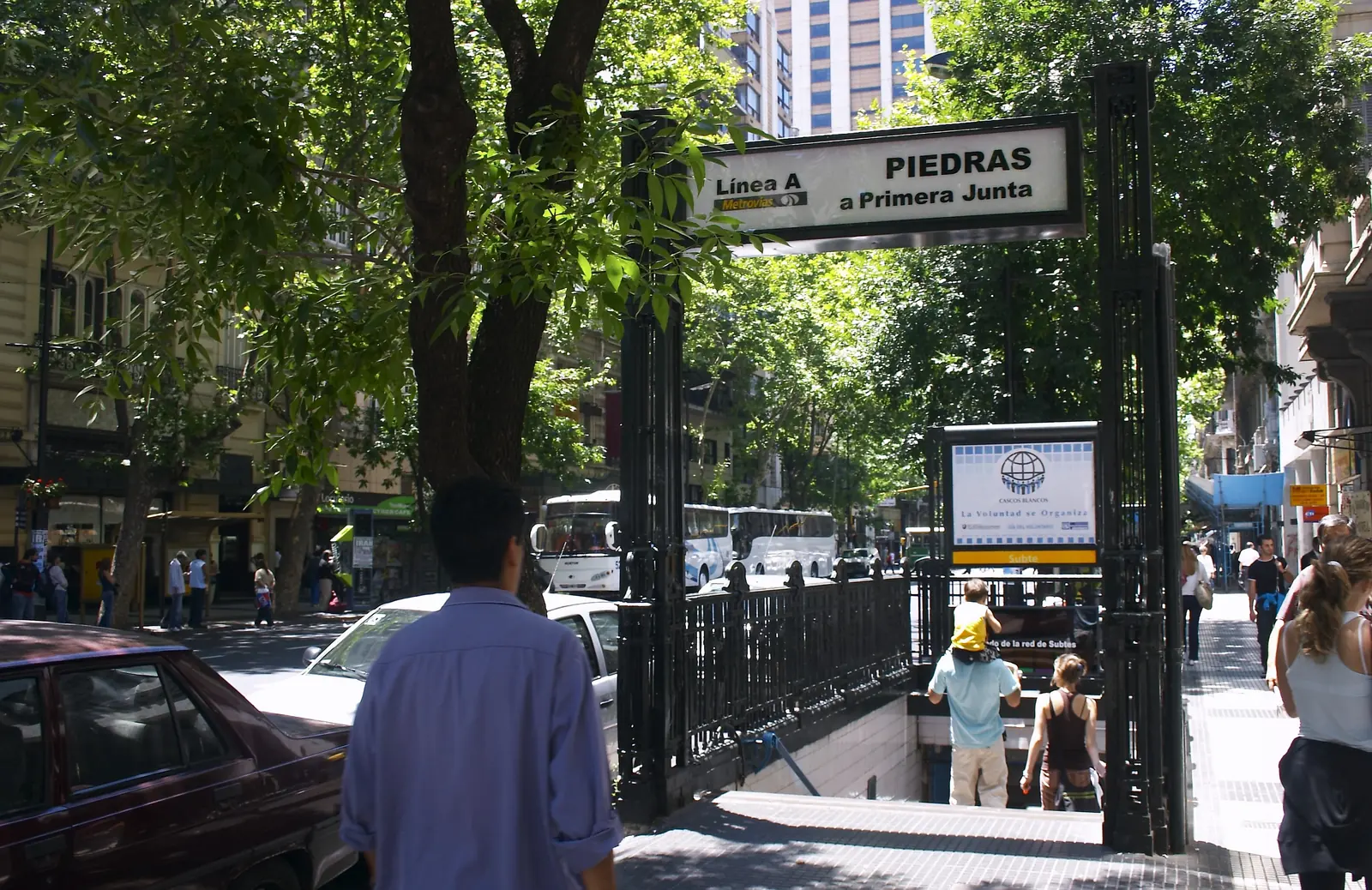
Ride Line A to Piedras, come up at the entrance beside the café, and you are there. That is really all you need, though the line deserves a little attention in its own right. Line A runs under Avenida de Mayo and part of Avenida Rivadavia, and it is the oldest line in the system. It opened in 1913 as the first underground line in South America, the Southern Hemisphere and the Spanish-speaking world. Piedras belonged to that inaugural section, so your journey to a nineteenth-century café fits the setting well.
By taxi or on foot
A taxi or ride-hail car to Avenida de Mayo is the simple alternative, especially after a late dinner or with anyone who would rather avoid stairs. Give the driver the avenue and ask to be dropped close to the Piedras station entrance. If you are staying in the centre, walking along the avenue from the Plaza de Mayo is pleasant in itself and takes you past much of what this guide describes. Check your route before you set out, and leave extra time on any night when you have one fixed slot to catch.
How the avenue was cut
The avenue was built on the initiative of Mayor Torcuato de Alvear, with work beginning in 1885 and finishing in 1894. Instead of widening a parallel street, the municipal public works director, Juan Antonio Buschiazzo, laid it straight through existing city blocks. The old Cabildo, where the 1810 assembly that touched off the May Revolution met, was partly demolished in 1888 to make way for its entry into the Plaza de Mayo. The Panic of 1890 caused delays and rolled back many of the more ornate plans. It was inaugurated on July 9, 1894.
Reading the fronts
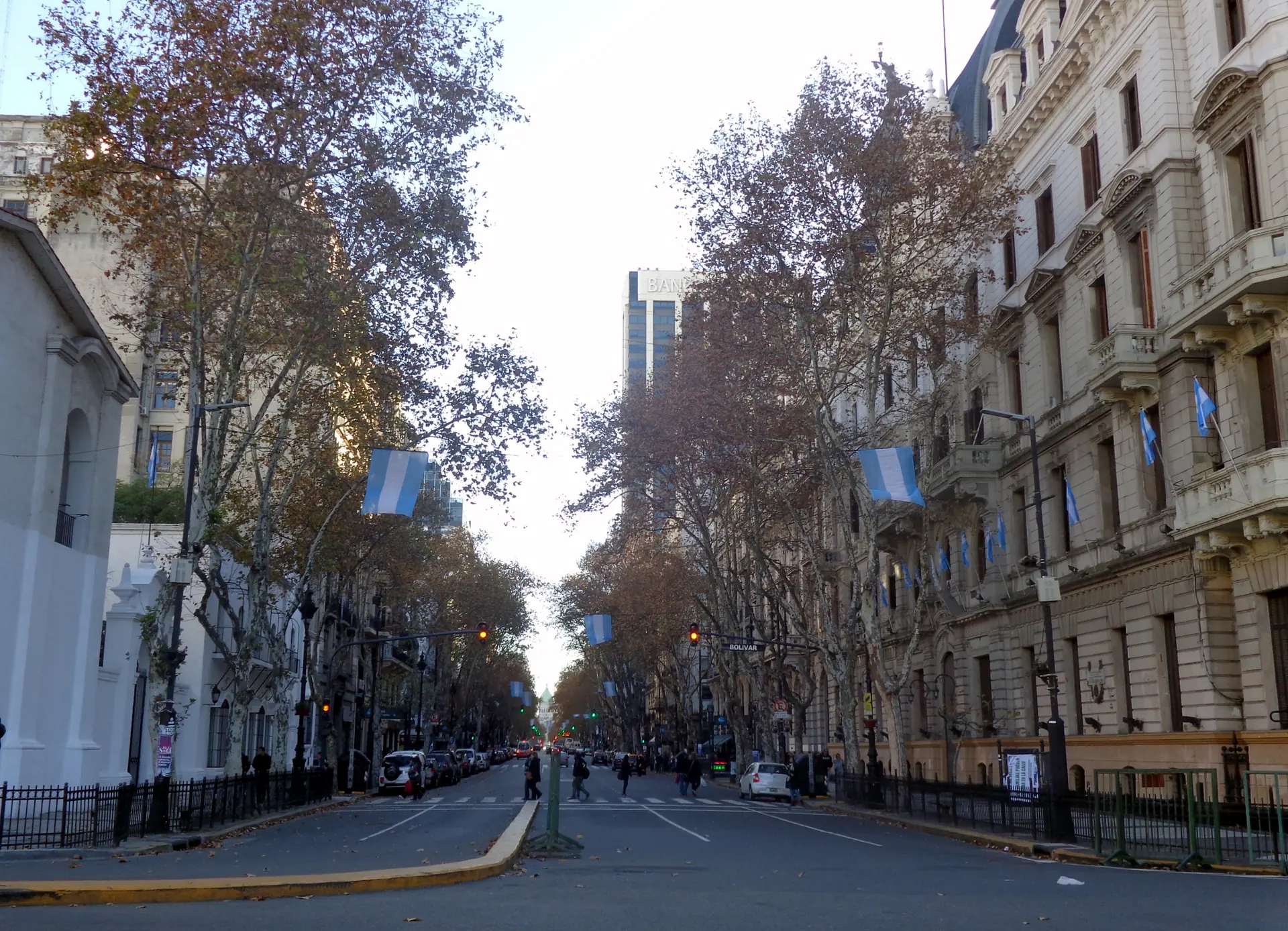
The avenue is often compared with the Gran Vía in Madrid, though that street came later, and with avenues in Paris and Barcelona. Mayor Miguel Cané's zoning rules limited buildings facing the 30-metre-wide avenue to 24 metres. The building known as the Barolo Tower was the first to get an exception. A one-block demolition in 1937 made way for Avenida 9 de Julio, which crosses the route. A 1997 decree then declared the avenue a National Historic Site, which restricts changes to building fronts.
The two ends of the street
The avenue connects the Plaza de Mayo with the Congressional Plaza, and Monserrat, the district it runs through, holds some of the city's most important public buildings, including city hall and the Casa Rosada. An early arrival gives you time to walk to the square at one end, or along to the Barolo Tower, before your slot. South of the Plaza de Mayo begins the older part of Monserrat, which runs on into San Telmo. Any of these fills an hour pleasantly if you are in the area ahead of time, and all of them are free to look at from the street.
Before and after the show
Since no dinner is promised on this ticket, the avenue is a practical place to base an evening. Decide before you set out whether you will eat first or afterwards, and book a table if it matters to you. If you are travelling back late, have your route home worked out in advance, and check that the Subte is still running if you plan to use it. Otherwise, a taxi from the avenue is an easy way to finish your night.
Who this isn't for
Stairs are the obvious reason to skip the Subte: if your party has mobility needs, use a car and mention them when you book the show. Anyone arriving with luggage should do the same. People nervous about navigating a new metro at night can also take a taxi without missing anything. And if you have only a narrow gap between a dinner in another barrio and your slot, do not rely on being able to fit a walk along the avenue into it. Go straight there, and enjoy the street another day.
Sources